Honey-Roasted Bosc Pears
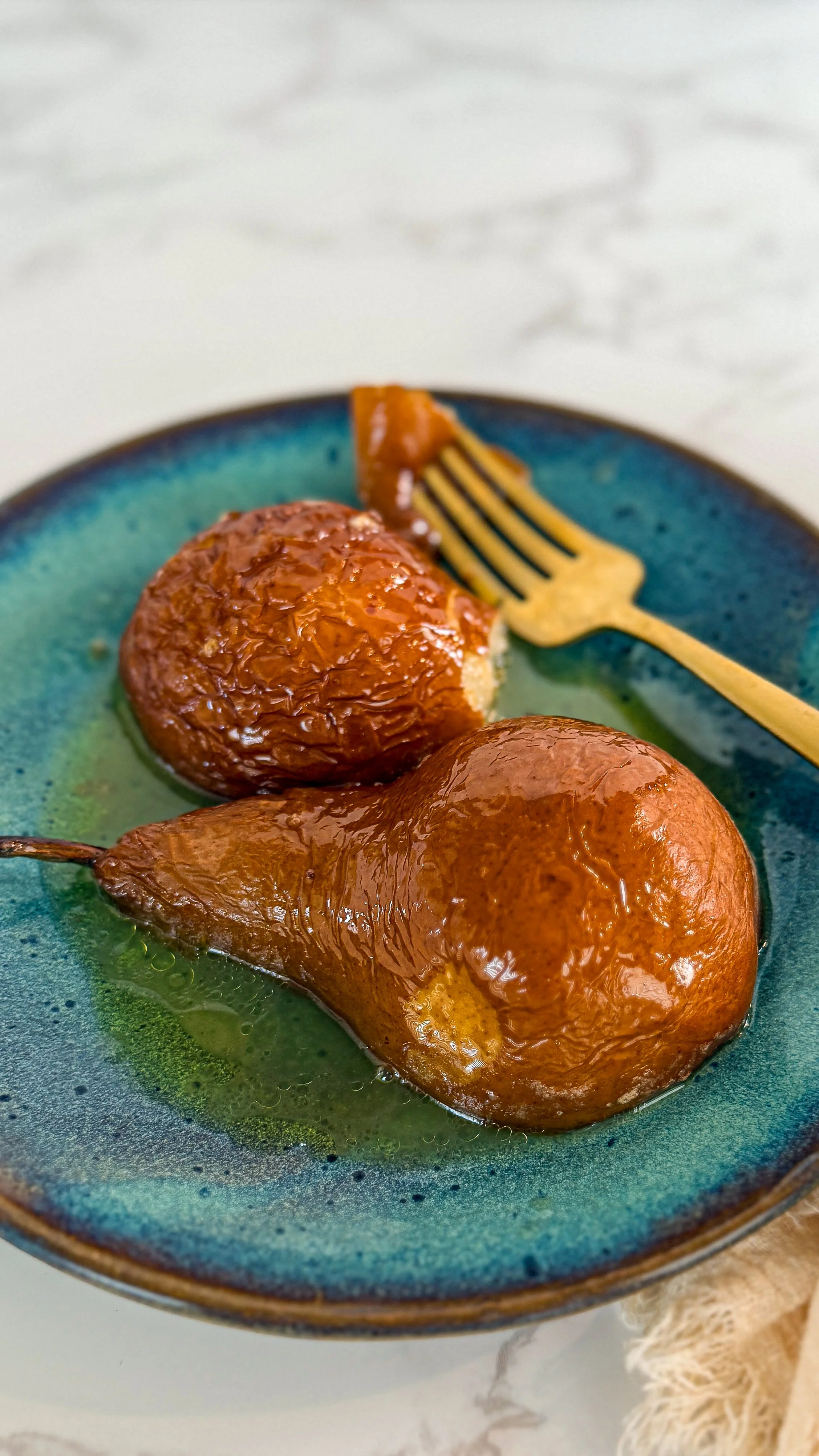
There is something incredibly therapeutic about the way a Bosc pear transforms in the oven. Unlike other varieties, the Bosc holds its elegant shape, softening into a buttery texture without losing its "bite." Drizzled with honey and extra virgin olive oil, these are the perfect high-fiber answer to a sweet craving. I love pairing mine with a dollop of cold Greek yogurt for that essential protein boost.
The GLP-1 Guide: Why Roasted Bosc Pears Work
This recipe is designed to satisfy a sweet craving while prioritizing digestive health and steady energy levels.
- Fiber for Satiety: Bosc pears are one of the highest-fiber fruits, providing about 6g per serving. High fiber intake is crucial for supporting digestive regularity and extending the feeling of fullness between meals.
- Healthy Fat Pairing: Using Extra Virgin Olive Oil isn't just for flavor—the healthy monounsaturated fats help slow the absorption of the natural sugars in the pear and honey, promoting more stable blood sugar levels.
- Gentle on the Gut: Roasting the pears breaks down the tough cellulose fibers (pectin), making the fruit much easier to digest than raw fruit if you are experiencing a slower digestive pace.
- Protein-Ready Base: While delicious on their own, these pears are designed to be a "protein vehicle." Pairing them with Greek yogurt or cottage cheese adds 15-20g of protein, turning a simple fruit dish into a muscle-supporting snack.
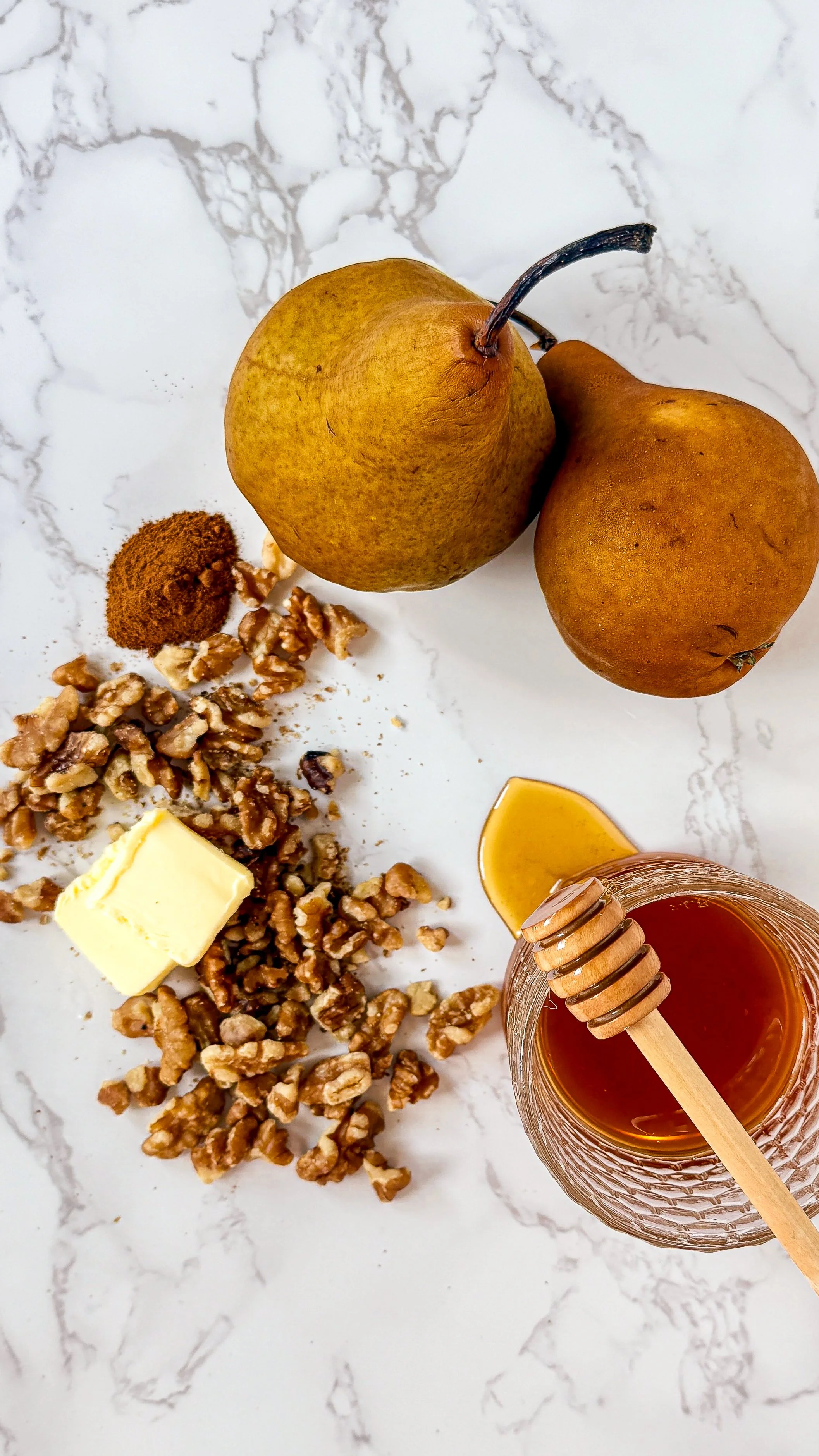
Every ingredient in this recipe has a job to do. From the fiber-rich Bosc pears to the heart-healthy fats in the olive oil, we’re focusing on ingredients that support digestion and steady energy. When shopping, look for pears that are firm to the touch; they’re the secret to achieving that perfect roasted, caramelized texture without the mush.
Ingredients for Honey Roasted Bosc Pears
Once you discover how fats, sugars, and aromatics each work their magic, you'll truly enjoy taking charge of how a firm fruit like the Bosc pear softens and caramelizes in the oven. With these simple basics, you can confidently play with new flavors or tweak the texture to suit your taste, so each batch of roasted pears feels like a special treat made just for you.
Bosc pears: They are a bit denser than other varieties, so they soften beautifully in the oven while still holding their shape and retaining a nice bite, even after 30 minutes of roasting.
Honey: I love using honey here because it browns more quickly than regular sugar and gives the pears a gorgeous, sticky glaze that soaks right into the fruit as it cooks.
Extra Virgin Olive Oil: A splash of olive oil helps the heat move through the pears, making them tender all the way through. It also balances the sweetness with a subtle, earthy flavor, making the whole dish feel a little more special.
Cinnamon: It adds a cozy, sweet flavor without extra sugar, and its warm aroma is what really makes this dish sing.
Sea Salt: Salt is essential here; it tames the bitterness of the pear skin and amplifies the honey's floral notes. It prevents the dessert from feeling "one-note" or cloying.
Substitutions
If your pantry is running low, don’t stress; this recipe is all about flexibility. The main idea is simple: roast firm fruit at 400°F for about 25 minutes, until it’s beautifully caramelized. You can swap in just about any secondary ingredient you have on hand, and you’ll still end up with something golden and full of flavor.
Honey
Maple Syrup: My favorite swap for honey! It brings a deeper, woodsy flavor and gives you that same sticky-sweet glaze.
Agave Nectar: Since it’s a bit thinner than honey, use a little less. Its mild sweetness really lets the pear flavor shine through.
Brown Sugar + Water: Just mix 2 tablespoons of brown sugar with 1 teaspoon of water for a quick syrup. The molasses in the sugar adds a lovely, honey-like richness.
Olive Oil
Unsalted Butter: For a richer, almost Pear Tarte Tatin vibe, try swapping in butter.
Coconut Oil: If you want a subtle tropical note, it's a great choice. It stands up beautifully to the high roasting temperature.
Neutral Oil: Grapeseed or avocado oil is perfect if you want the fruit flavors to really shine.
Cinnamon
Vanilla Extract: Just a few drops will make your kitchen smell like a bakery.
Ginger: Fresh or ground, ginger brings a bright, spicy kick that pairs so well with roasted fruit.
Black Pepper: A few cracks of black pepper turn this into a savory-sweet side that’s a little unexpected and so good.
Bosc Pears:
Apples: Firm apples like Granny Smith or Honeycrisp work beautifully here. Roast them at 400°F for about 25 minutes, and they’ll hold their shape and caramelize just right.
Anjou Pears: These are more common but slightly softer; if using these, roast at 400°F but reduce the initial roasting time by 5 minutes (to 20 minutes total) so they don't get too mushy.
Quality Tips
Bosc Pears: The "Neck Check" Since you specifically want firm/hard pears for roasting, select pears that are not fully ripe; they should remain hard so they hold up during roasting.
When you’re picking them out, look for pears that feel as firm as an apple. If they’re soft, they’ll just fall apart while roasting.
Try the neck check: gently press near the stem. For roasting, you want zero give; the harder the pear, the better it will hold up to a long, slow roast.
Bosc pears are easy to spot with their cinnamon-hued, textured skin. Just steer clear of any with deep bruises or shriveled spots near the stem.
Honey: Look for "Raw" and "Unfiltered." The type of honey you use makes a big difference in both flavor and nutrition.
Raw, unfiltered honey keeps all those lovely enzymes and delicate floral notes intact.
If you spot single-origin honey, like clover or wildflower, give it a try. Clover honey is mild and sweet, while wildflower has a deeper, more complex flavor that pairs especially well with the earthy taste of Bosc pears.
Skip any honey blends or jars with added sugars, check the label, and make sure it’s just honey, nothing else.
Extra Virgin Olive Oil: The "Harvest" Date Not every olive oil is a good fit for sweet recipes like this.
Look for olive oil that’s described as mild, fruity, or buttery. If you see words like 'peppery' or 'robust,' those oils might be too strong and overpower the pears.
Always choose olive oil in a dark-green or opaque glass bottle; light can spoil it before you even open it. Skip the clear plastic bottles to keep your oil fresh.
Check the bottle for a harvest date if you can; fresh olive oil always tastes best.
Market List: Honey Roasted Bosc Pears
Produce:
- 2 Bosc Pears
Pantry:
- Honey
- Extra Virgin Olive Oil
- Cinnamon
- Sea Salt
Pro-tip: Use a melon baller to create a clean "well" in the center of your pear. This creates a tiny reservoir for the honey and cinnamon to pool and bubble as they roast. Halfway through, I always baste the pears in their own juices to ensure every bite is infused with that golden, aromatic glow.
How to Make Honey Roasted Bosc Pears
Prep the Oven and Pan: Preheat your oven to 400°F (200°C). Line a rimmed baking sheet or a ceramic baking dish with parchment paper.
The Honey Glaze: In a small bowl, whisk together the honey, olive oil, cinnamon, and salt. If the honey is too thick, microwave it for 10 seconds to make it pourable.
Coat the Pears: Place the pear halves cut-side up on the tray. Brush the honey mixture generously over the cut surface. Flip them over so they are cut-side down. This traps the steam against the tray, softening the "hard" flesh faster while caramelizing the edges.
Roast: Bake for 20 minutes.
Flip and Baste: Carefully flip the pears cut-side up. Use a spoon to drizzle any escaped honey juices from the pan back into the hollowed-out centers.
Final Sear: Roast for another 5–10 minutes until the pears are fork-tender and the edges are a deep golden brown.
Serve: Let them cool for 5 minutes. The glaze will thicken as it sits.
Storage & Reheating
Let the pears cool to room temperature before covering them. If you rush this step, steam gets trapped, and the skins turn soggy, and the honey glaze loses its shine.
Once they’re cool, tuck the pears into an airtight glass container and refrigerate. They’ll keep well for 4 to 5 days.
I always store them cut-side up so all that sweet honey and pear juice stays right in the center, instead of running out onto the bottom of the container.
These pears are wonderful straight from the fridge, but if you want to bring back that just-baked honey glow, a quick warm-up does the trick. Here’s how I like to do it without losing their firm bite:
My favorite way is the oven: just set the pears on a parchment-lined tray and warm them at 350°F for 8 to 10 minutes. The centers get perfectly warm, and the honey edges caramelize again, so they taste like they’re fresh from the oven.
If you’re in a hurry, the air fryer is a great shortcut. Just pop the pears in at 325°F for 3 to 5 minutes. The glaze gets a little crisp and tacky on the outside, which is so good with the soft, dense pear.
For a super-quick snack, microwave the pears on medium for 30 to 45 seconds. They’ll get much softer, and the glaze turns into a thin syrup, which is perfect if you want to stir the pear into a bowl of warm oats or cottage cheese.
Most people think they have to give up fruit-forward desserts on a GLP-1 journey, but it’s all about the preparation. Roasting these pears breaks down the tough fibers, making them gentle on the stomach while keeping you satisfied and full. It’s elegant, intentional, and takes less than 30 minutes. Which would you choose: a drizzle of extra honey or a sprinkle of crushed pistachios?
Frequently Asked Questions
Can I use a different type of pear?
You can use Anjou or Bartlett, but Bosc is preferred for roasting thanks to its low water content, which keeps it firm during roasting.
Is the skin edible?
Yes, Bosc skins are thin and soften when roasted. Leaving them on helps with shape and nutrition.
Can I make this sugar-free?
Yes, you can swap honey for a sugar-free sweetener, but caramelization will occur faster, so watch carefully.
Why is my honey not sticking to the pear?
If pears are waxy, pat the cut side dry before adding the honey mixture.
Is this recipe "GLP-1 friendly"?
Yes! For a GLP-1-friendly meal, pair the fiber-rich pear with Greek yogurt for protein and fullness.
medical disclaimerI share this post to provide helpful information and educational resources based on my own experiences and research. However, it’s important to remember that everyone’s health needs are unique, and this content is not a substitute for professional medical advice. If you’re considering any changes to your diet, supplements, or overall health routine, I strongly recommend consulting with your doctor or a qualified health professional first. They can offer personalized guidance based on your individual health history and needs.
Expert Tips for the Best Honey-Roasted Bosc Pears
The "Acid Splash" Pre-Roast
Before you apply the honey and oil, toss the sliced pears in a tablespoon of fresh lemon juice.
Why it works: Bosc pears oxidize (turn brown) quickly once cut. The lemon juice prevents browning, but more importantly, its acidity brightens the honey glaze, creating a "bright" flavor profile that feels lighter and fresher.
Mastering the "Deep Well."
When you remove the core, don't just take out the seeds. Use a melon baller to create a slightly larger, clean "well" in the center of the pear.
Why it works: This creates a reservoir for the honey, olive oil, and pear juices to pool during the second half of the roast. When you serve it, that "well" holds the pool of syrup, making it look incredibly appetizing on camera.
Cold-Start Infusion
Stir your cinnamon (and maybe a tiny pinch of cardamom or vanilla) into the honey 30 minutes before you plan to roast.
Why it works: Spices are fat-soluble and sugar-soluble. Letting them "bloom" in the honey before they hit the heat ensures the flavor is evenly distributed throughout the glaze rather than just sitting on the pear skin.
The "Carry-Over" Caramelization
Take the pears out of the oven when they are just tender. They will continue to cook for 3-5 minutes in the hot pan.
Why it works: This prevents the "mush factor." By pulling them early, the residual heat finishes the softening process, leaving you with a pear that is tender yet retains a distinct, elegant "bite."

Honey-Roasted Bosc Pears
Ingredients
- 2 Bosc pears (hard/firm)
- 1 tbsp honey (or maple syrup)
- 1/2 tsp cinnamon
Instructions
- Slice the pears in half lengthwise. Use a metal measuring spoon or a melon baller to scoop out the round core and the stringy bit leading to the stem.
- Place the pars cut-side up in a baking dish. In a small bowl, whisk the melted butter, honey, and cinnamon. Brush this mixture generously over the cut surface of the pears.
- Flip the pears so they are cut-side down. Pour about about 1/2 cup of water into the bottom of the dish and cover tightly with foul. This creates steam to soften your hard pears. Bake for 20 minutes.
- Remove the foil and flip the pears over so they are cut-side up again. Baste them with the juices in the pan.
- Bake uncovered for another 15-25 minutes. They are done when a knife slides into the thickest part like it's hitting soft butter. The edges should look slightly golden and bubbly.
Nutrition Facts
Calories
231Fat
10 gSat. Fat
1 gCarbs
38 gFiber
7 gNet carbs
31 gSugar
26 gProtein
3 gSodium
22 mgCholesterol
0 mgAll nutritional information is estimated and will depend on the exact ingredients you used.

Hi, I’m Racheal
If you’re on a GLP-1 medication, you know the struggle: you’re finally losing weight, but your appetite is gone, your energy is dipping, and you’re worried about getting enough protein to keep your muscles.